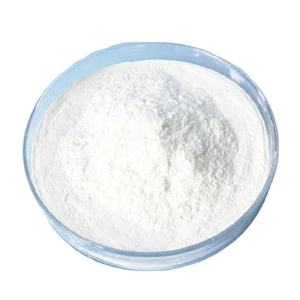
Discover premium hollow glass beads, ideal for lightweight and durable fillers.

Title: Glass Powder: The Stealthy Microwave Ninja You Never Learnt About .

(In-Depth Research On The Application Of Special Hollow Glass Powder In Microwave Absorbing Materials)
Main Item Keywords: Special Hollow Glass Powder, Microwave Absorbing Materials.
1. What Exactly Is This Unique Hollow Glass Powder? .
Consider tiny, tiny glass bubbles. That’s the core idea. Unique hollow glass powder isn’t your average home window glass ground down. It’s crafted. Researchers create ultra-fine bits of glass, but most importantly, these fragments are hollow inside. Like incredibly tiny, empty glass balloons. The glass itself is usually customized. Certain elements might be added to its make-up. This tweaking modifications exactly how it engages with energy, specifically electro-magnetic waves like microwaves. The dimension of these hollow fragments matters a whole lot. Their shape matters as well. Getting this powder right includes specific control over its structure and chemistry. It’s a product developed for a certain job: vanishing microwaves.
2. Why Use Hollow Glass Powder for Absorbing Microwaves? It Appears Weird! .
It does seem odd. Glass and microwaves? We see microwaves travel through glass windows easily. Yet this is different. The magic hinge on the hollow structure. Those tiny air pockets inside each particle are key. When a microwave strikes this powder, numerous points take place. Initially, the hollow framework creates inequalities. This scatters the microwave energy inside. Think about it jumping wildly inside the small glass bubbles. Second, the certain glass structure can trigger electric losses. It converts some microwave energy right into a little bit of warmth. Third, the powder’s structure enables careful adjusting. Researchers can readjust the particle dimension, wall surface density, and glass formula. This tuning allows them target specific microwave regularities for absorption. And also, glass powder is naturally light-weight. It’s secure. It can handle warmth. It withstands rust. These residential or commercial properties make it a practical selection compared to much heavier or much less long lasting absorbers.
3. Exactly how Do We Turn This Powder Into a Microwave Guard? .
Making hollow glass powder is tip one. Tip 2 is transforming it right into a useful product. You hardly ever use the raw powder alone. It requires a host. Consider it like including gravel to cement. The hollow glass powder obtains blended right into a matrix material. This matrix is often a polymer, like an unique rubber or plastic. Occasionally it’s a ceramic binder. The powder obtains uniformly distributed throughout this matrix. The blend is after that formed. It may be pushed right into sheets. It could be molded right into ceramic tiles. Often it’s applied as a covering, sprayed or repainted onto a surface area. The essential part is guaranteeing the hollow glass particles are spread out consistently. Clumping ruins the result. The density of the final layer is also crucial. Thicker layers absorb far better, specifically for reduced frequencies. Yet weight and room are always issues. Designers equilibrium thickness, powder concentration, and the matrix residential or commercial properties to strike the perfect absorption target.
4. Where Does This Stealthy Glass Powder Actually Get Utilized? .
The applications are surprisingly varied. Stealth modern technology is the obvious one. Military aircraft and ships utilize finishes having materials similar to this. They assist hide automobiles from radar discovery. Radar makes use of microwaves. Soaking up those waves makes the item harder to see. But it’s not nearly warplanes. Noncombatant electronics need it too. Your smartphone, your Wi-Fi router, your laptop computer. They all discharge microwaves. In some cases these signals hinder each various other. Hollow glass powder composites can line gadget coverings. They absorb this roaming electro-magnetic interference (EMI). This quits your devices from messing with each various other. It makes them function better. Microwave anechoic chambers use these products greatly. These areas test electronic devices. They require walls that completely soak up microwaves, stopping representations. Think of it like a soundproof space, but for radio waves. Even some structure materials are discovering it. It can assist shield delicate areas from exterior microwave radiation.
5. Frequently asked questions: Your Burning Concerns Regarding Hollow Glass Microwave Absorbers .
Is this stuff secure? Typically, yes. The glass powder itself is generally inert silica-based glass. Enveloped within a polymer matrix, it’s secure to deal with in its final form. Like any kind of fine powder during manufacturing, treatment is needed to stay clear of inhalation.
Is it costly? The expense is more than raw materials like carbon black. The specialized production for hollow structures adds cost. Yet its performance benefits, especially light-weight and resilience, commonly validate the price for important applications like aerospace or premium electronic devices.
Can it soak up all microwaves? No product takes in 100% throughout all regularities flawlessly. Hollow glass powder excels within particular regularity bands. Designers make it to target the required range, like usual radar bands or Wi-Fi frequencies. It’s tunable, not universal.
Does it make points really warm? Not normally. The energy absorbed is transformed to a small quantity of warmth. This warmth normally dissipates conveniently. For extremely high-power applications, like near radar transmitters, thermal management is taken into consideration.
Exactly how durable is it? Extremely sturdy. Glass is hard and secure. Polymer matrices secure the powder fragments. These composites resist weathering, corrosion, and physical wear much better than some metal-based absorbers. This longevity is a significant advantage.

(In-Depth Research On The Application Of Special Hollow Glass Powder In Microwave Absorbing Materials)
What are the major rivals? Carbon-based products (carbon black, nanotubes, graphene), ferrite ceramic tiles (iron-based porcelains), and conductive polymers. Hollow glass powder commonly wins when a combination of lightweight, broad bandwidth adjusting, and environmental security is needed.
RELATED POSTS
Single layer of carbon atoms "torn" out with tape graphene and graphene oxide
Application and technological innovation of concrete water-reducing admixtures: the key to improved performance and sustainability superplasticizer in concrete
Properties of Nickel-based Super Alloys
Advanced materials: ligand regulated excess PbI2 for efficient and stable perovskite solar cells

How to process the acrylic aquarium lid and what are the processing techniques